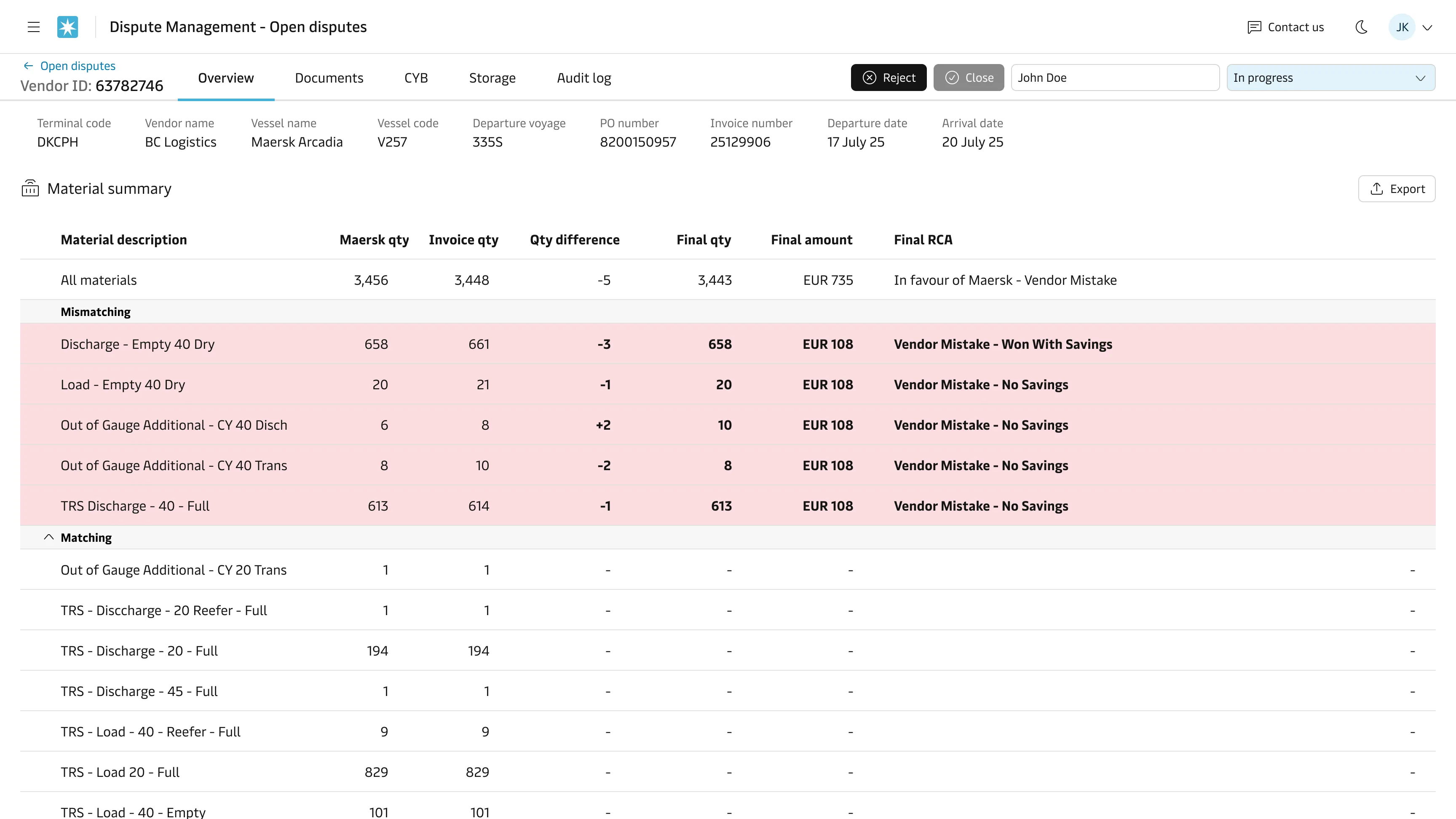
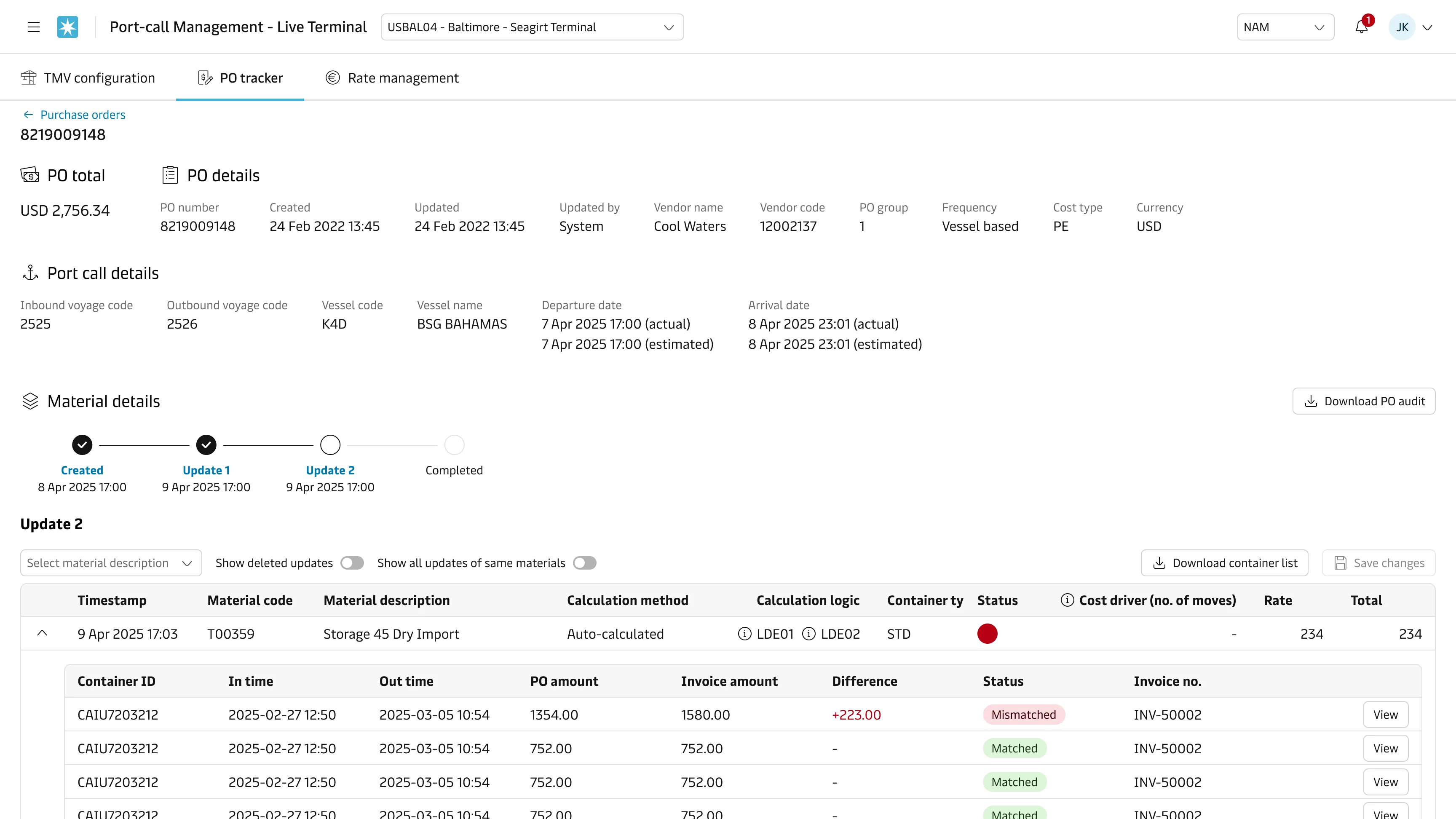
Rate Management Maersk 2023–present
I created a governed source of truth for cost data
Rate upload time dropped by 65%, and time to extend or expire rates dropped by 70%.
Role
Product Designer, owned UI and workflow design end-to-end.
Team
Product Manager, Architect, Frontend Engineers.
Delivered
UI design, workflow design for a rate management system.
Context
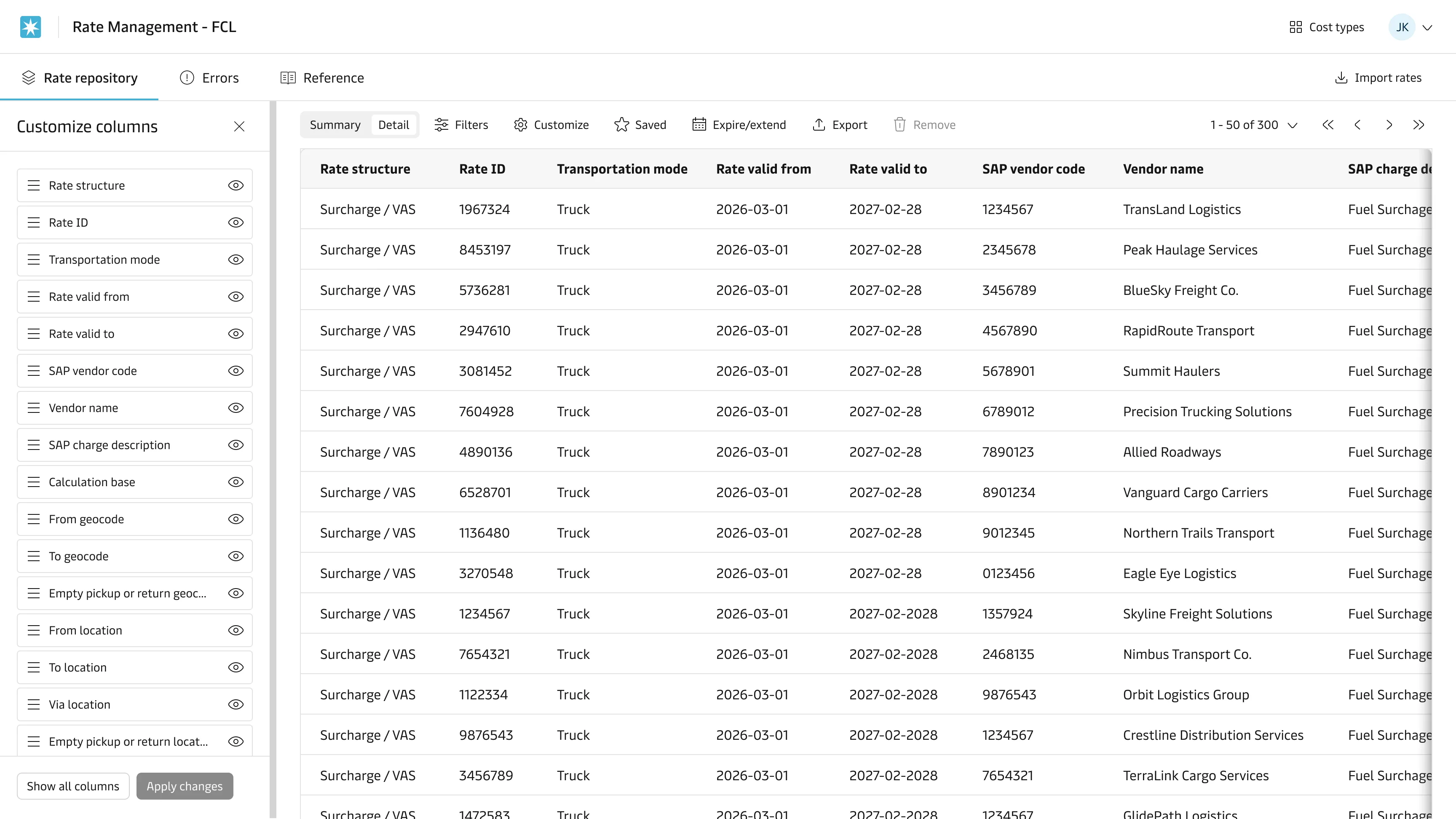
Cost data was spread across multiple systems, and keeping rates current was slow and manual. The business needed a single place where rates could be validated on the way in, governed through their lifecycle, and consumed reliably by the systems that depend on them.
Strategy
The platform was built to anchor cost data so every operational and pricing decision uses an accurate rate, consistently and in real time. The deeper move was treating rates as a governed source of truth that downstream systems consume, rather than data each system manages locally.
The next generation of the platform extended that principle further. Instead of a fixed schema for each cost type, the architecture became configurable, so new cost types can be onboarded without rebuilding the platform each time. The UX challenge moved from designing bespoke flows per cost type to designing reusable patterns that hold up across a growing catalogue of cost types.
“This has proven to be a highly user-friendly tool that greatly supports our procurement operations.”
What shipped and what changed
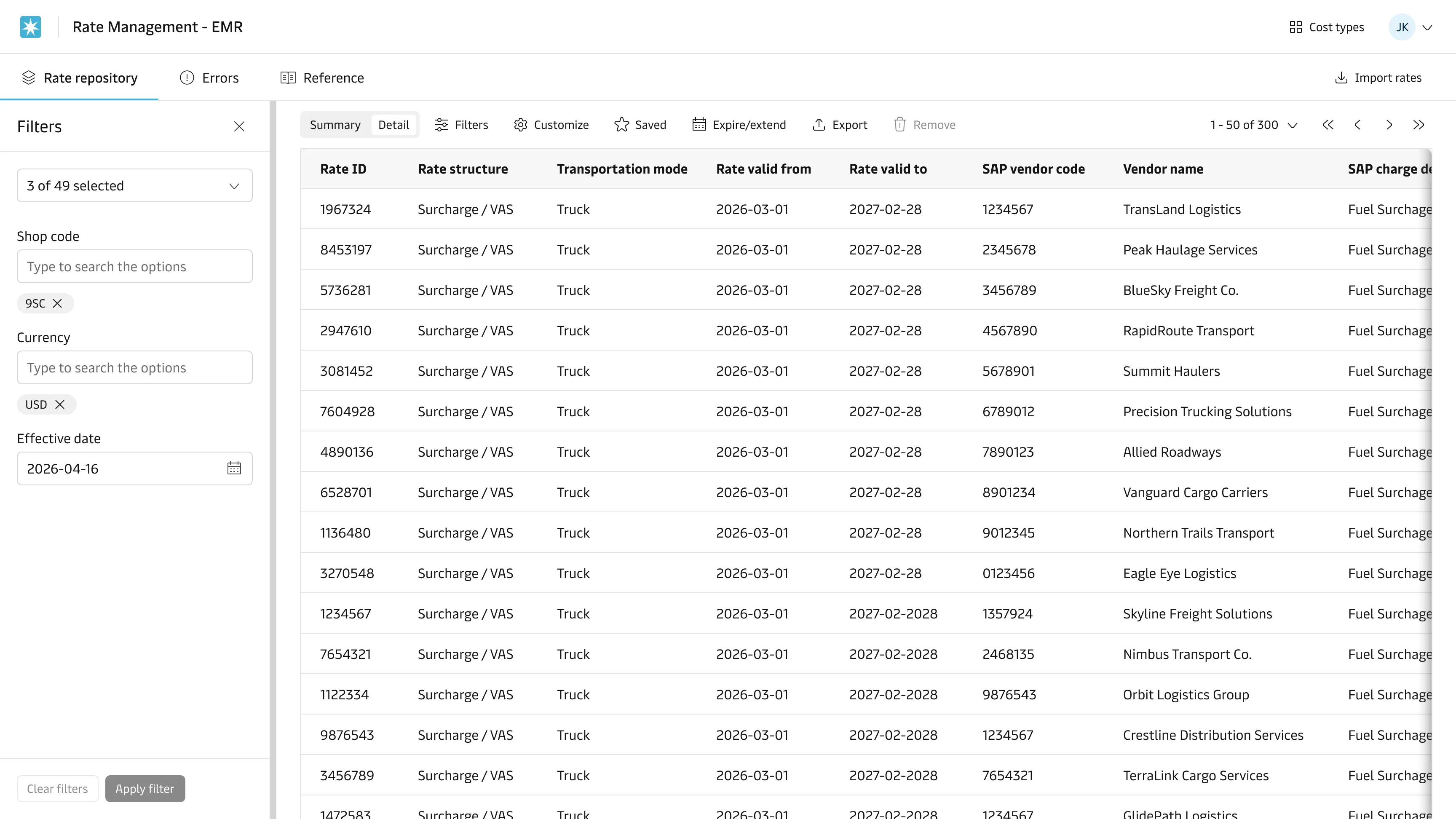
The first release covered filtering, viewing, uploading, expiring, and extending rates. Rate maintenance moved from a fragmented, error-prone process into a governed workflow, with validation happening at ingestion rather than downstream. Rate upload time dropped by 65%, and time to extend or expire rates dropped by 70%.
The platform became the reference point for rates across procurement. The next generation added configurable cost-type onboarding, which reduced the engineering effort needed to support new rate structures and gave the platform room to grow into adjacent parts of the business.
“Easy to use and understand without much training/explanation.”
Tradeoffs
The core tension in the initial release was between shipping quickly and building the UI depth I believed the product needed.
Bulk entry stayed in Excel for the first release. A modern web app relying on desktop software was not ideal, but it was already the team’s bulk validation tool, it handled high-volume batch work more reliably than we could build in time, and it let users check rates before import. I drove that decision with alignment across Product, Engineering and Business.
What I’d do differently
There was no documented plan to move deferred workflows back into the UI. Without one, the UX debt compounded quietly while new priorities took the focus. If I were leading this now, I’d pair every speed-to-ship tradeoff with a written commitment to when and how it gets revisited.
I also pushed for letting users expire and extend rates without leaving the app. After launch the team focused on new cost types, and those actions were judged too complex to prioritise.